The weather has been very bad in Ladakh for the past few days. Kindly contact us for further information regarding the 21st IALS Conference.
Please note: Because of the weather, the conference may be held in a hybrid format in both Kargil and Leh. Those who can reach Kargil are encouraged to proceed with their travel plans.
Conference Dates: 28th August – 31st August 2025 Venue: Tourist Facilitation Centre, Kargil
Dear Conference Participants,
We wish to inform you that the final dates for the conference have been scheduled for the 28th August (starting midday, Inaugural dinner in the evening) until the 31st August 2025 (ending midday) to be held at the Tourist Facilitation Centre, Kargil.
The later start on the 28th should also enable people to arrive from Leh the same day to participate in the events. Likewise, the ending on the 31st at midday should give people the opportunity to return to Leh the same day.
We will update the website soon for accommodation and travel details.
Please be informed, that the deadline for the submission of abstracts has been extended until the 15th of April, 2025!
In addition, we created an informal document containing hints and tips how to write an abstract as well as create and hold a presentation at the IALS Conference. We hope this document can help especially first time presenters to have a smooth and enjoyable experience at our conference. You can download the document [HERE].
Further information on the conference can be found [HERE].
The 21st Conference of the International Association for Ladakh Studies (IALS) will be held between 24th and 30th August 2025 in Kargil, Union Territory of Ladakh, with exact dates to be announced soon.
We invite abstracts for paper presentations for the 21st IALS conference.
This year’s conference does not have a specific theme. Therefore, we welcome abstracts on a wide range of topics related to Ladakh, spanning academic disciplines such as architecture, language, history, ecology, and the natural sciences, among others.
Submissions for theme-based panels (proposed by three or more individuals) are also invited. The final panels and sub-panels will be decided after the abstracts are accepted.
Abstract Submission Guidelines:
Length: 250 to 350 words
In addition, provide:
Title of your paper
Your affiliation
A short bio note
If your paper has multiple authors, please ensure that bio notes for all authors are submitted.
Deadline for abstract submission: 31st March 2025 Notification of acceptance: 30th April 2025
We encourage all presenters to be members of IALS. For membership fees and related queries, please contact Lauren Smyth, Membership Secretary, at treasurer@ladakhstudies.org.
Please ensure that your membership is up to date. If not, you may renew it on-site at the conference.
Conference Registration Fees:
Category
South Asian Participants
Non-South Asian Participants
Regular Participants
INR 2000
USD 70
Students
INR 1000
USD 50
The same fees apply to attendees who are not presenting a paper.
Included in the conference fee are as well:
Lunch
Refreshments
Conference dinner
IALS offers a limited number of student grants, based on merit and financial need. If you believe you are eligible, please indicate this in your application.
If you are willing to generously sponsor the conference feefor young research students, please contact the Conference Convenor at ialsconference2025@gmail.com.
For further queries, please email us using the same email address.
The passing of the writer and historian Abdul Ghani Sheikh leaves an immense gap in the lives of his family and innumerable friends as well as the wider Ladakh studies community. Born in 1936, he was himself a witness to history in that he had lived through the traumas of Partition in 1947 and the period of accelerating political and social change that followed. In his short stories and in his historical research, he wrote with insight and compassion. To many of us, he served as a mentor and a friend. Here I would like to share a note about his association with the IALS.
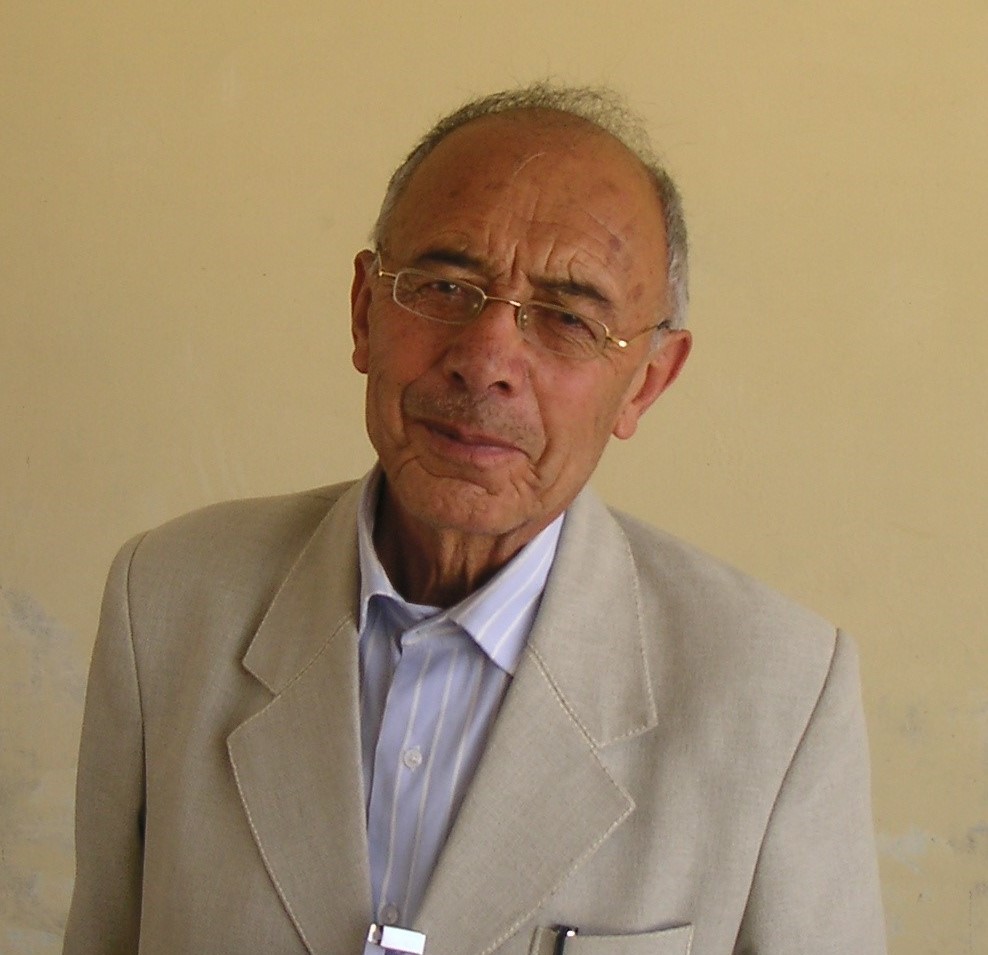
Abdul Ghani Sheikh in 2009
In 1989, Sheikh Sahib travelled to the UK for the IALS conference at the University of Bristol, which was organised by Dr Henry Osmaston. Although this was the fourth in the series of Ladakh studies conferences, it was the first to be held specifically under the auspices of the IALS. Sheikh Sahib presented a paper on “A Brief History of Muslims in Ladakh”. The other Ladakhi contributors in Bristol were Jamyang Gyaltsen, Dr Nawang Tsering, Nawang Tsering Shakspo, and Sonam Wangchuk (SECMOL).
Abdul Ghani Sheikh presenting in Bristol in 1989. John Bray on the left, Nawang Tsering Shakspo on the right.
Thereafter, Sheikh Sahib became a regular presenter at IALS conferences both in Ladakh and abroad. The last international conference in which he participated was in Rome in 2007. Always eager to expand his international horizons, he managed to stop over in Istanbul on the return journey and made contact with a Uighur friend who lived in Turkey but had long family associations with Ladakh.
Shiekh Sahib’s list of IALS publications is representative of his special interests. By virtue of his background, he naturally placed a particular focus on the history of Ladakhi Muslims and on Ladakh’s relationships with Central Asia and other neighbouring regions. However, he always took a broad view of Ladakhi society. His other writings included a biography of the Ladakhi Buddhist leader Sonam Norboo (1909-1980) and he often expressed appreciation for the contributions of the Moravian community.
Abdul Ghani Sheikh with Radhika Gupta at the IALS conference in 2009. Christian Jahoda and Kurt Tropper in the background.
In the early 2000s, Sheikh Sahib served as the Hon Secretary of the IALS’s Ladakh Committee. I particularly remember working with him to secure the participation of two Balti scholars, Syed Bahadur Ali Salik and Ghulam Hasan Hasni, at the IALS conference in Kargil in 2005. This involved writing invitation letters and supporting documentation to the Indian High Commission in Islamabad as well as the Pakistani High Commission in New Delhi and – at the very last minute – the then Indian Foreign Minister Natwar Singh. Eventually, we were successful but the two Baltis only arrived in Kargil on the very last day of the conference.
Over the years, many of us benefitted from the hospitality of Sheikh Sahib and his family at the Yasmin Guesthouse, now the Grand Yasmin Ladakh, near Fort Road. Whether at his home or in one of Leh’s restaurants and coffee houses, it was always a delight to meet him. He was consistently unassuming, always perceptive, sometimes quite sharp in his observations. We have lost one of the best of friends.
Abdul Ghani Sheikh’s publications under the auspices of the IALS
1995. “A Brief History of Muslims in Ladakh.” In Recent Research on Ladakh 4 & 5, pp. 189-192. Edited by Henry Osmaston and Philip Denwood. London: School of Oriental and African Studies; Delhi: Motilal Banarsidass.
1996. “Some Wellknown Adventurers of Ladakh.” In Recent Research on Ladakh 6, pp. 231-238. Edited by Henry Osmaston and Nawang Tsering. Bristol: Bristol University Press; Delhi: Motilal Banarsidass.
1997. “Ladakh’s Relations with Central Asia.” In Recent Research on Ladakh 7, pp.447-456. Edited by Thierry Dodin and Heinz Räther. Ulmer Kulturanthropologische Schriften Band 8. Ulm: Abteilung Anthropologie, Universität Ulm.
1999. “Economic Conditions in Ladakh during the Dogra Period.” In Ladakh: Culture, History and Development, between Himalaya and Karakoram. Recent Research on Ladakh 8, pp. 339-349. Edited by Martijn van Beek, Kristoffer Brix Bertelsen and Poul Pedersen. Aarhus: Aarhus University Press.
2007. “Transformation of Kuksho Village.” In Recent Research on Ladakh 7, pp. 163-170. Edited by John Bray and Nawang Tsering Shakspo. Leh: Jammu & Kashmir Academy of Art, Culture & Languages.
2009. “Kargil from the Perspective of Historical Travellers and Government Officials.” In Recent Research on Ladakh 2009, pp. 39-45. Edited by Monisha Ahmed & John Bray. Kargil & Leh: International Association of Ladakh Studies.
2009. “The Traditions of Sufism in Ladakh.” In Mountains, Monasteries and Mosques. Recent Research on Ladakh and the Western Himalaya, pp. 131-139. Edited by John Bray & Elena De Rossi Filibeck. Supplement No. 2 to Rivista degli Studi Orientali 80 (New Series). Pisa & Rome: Sapienza, Università di Roma, Dipartimento di Studi Orientali.
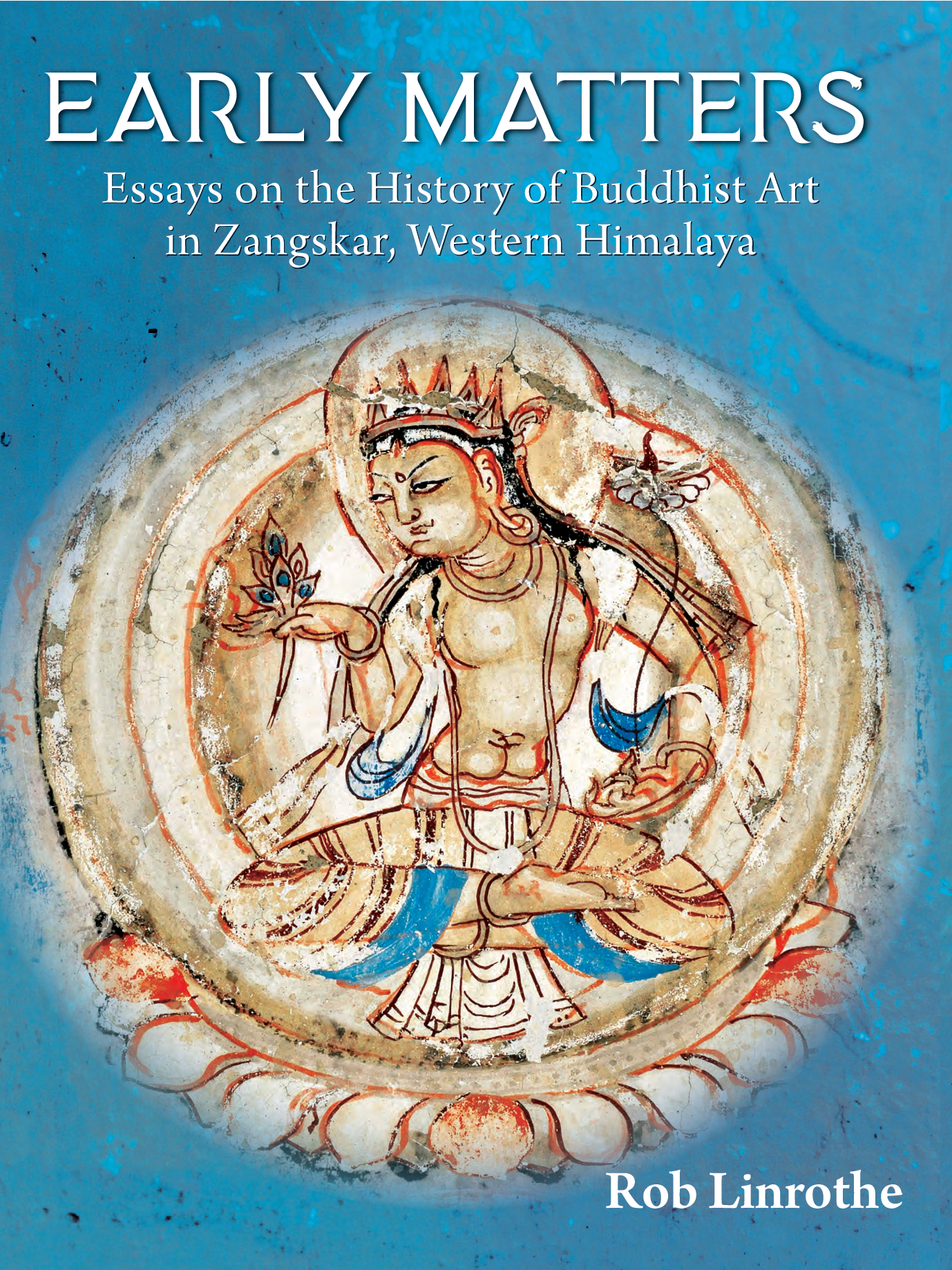
we like to draw your attention to the recently released book “Early Matters: Essays on the History of Buddhist Art in Zangskar, Western Himalaya” by Rob Linrothe. Please find the description below.
Early Matters: Essays on the History of Buddhist Art in Zangskar, Western Himalaya by Rob Linrothe
Studio Orientalia (New Delhi), 2024, xiv+510p., (4)col. maps, full of col. illus., bib., ind., 31´24cm.ISBN 9788196871567 US$90
This book is focused on the art in the remote valleys of Zangskar, a region of the Union Territory of Ladakh in northern India. It proposes that, first, the people and institutions in Zangskar produced a treasury of understudied Buddhist art in the form of architecture, sculpture, and painting and that, second, examination of this corpus models the formation of early visual culture in the western Himalaya as a whole. Its chapters provide correctives to the reduction of this region to a miniature or provincial Tibet, particularly in the early periods of extant sculpture (between the seventh and eleventh centuries) and of painting (tenth to thirteenth centuries). It locates Zangskar as its own center intersecting and in contact with a range of Buddhist visual production sites surrounding it in all directions, including greater Kashmir, Khotan, Central Asia, northern and eastern India, Tibet and western Nepal. The analysis of early Zangskari Buddhist images is a much more complex—and interesting—story of cultural development and inspiration than the simplified “Indo-Tibetan” narrative which ignores the agency of Zangskar’s artists, merely attributing forms and objects to invisible Tibetan hands.
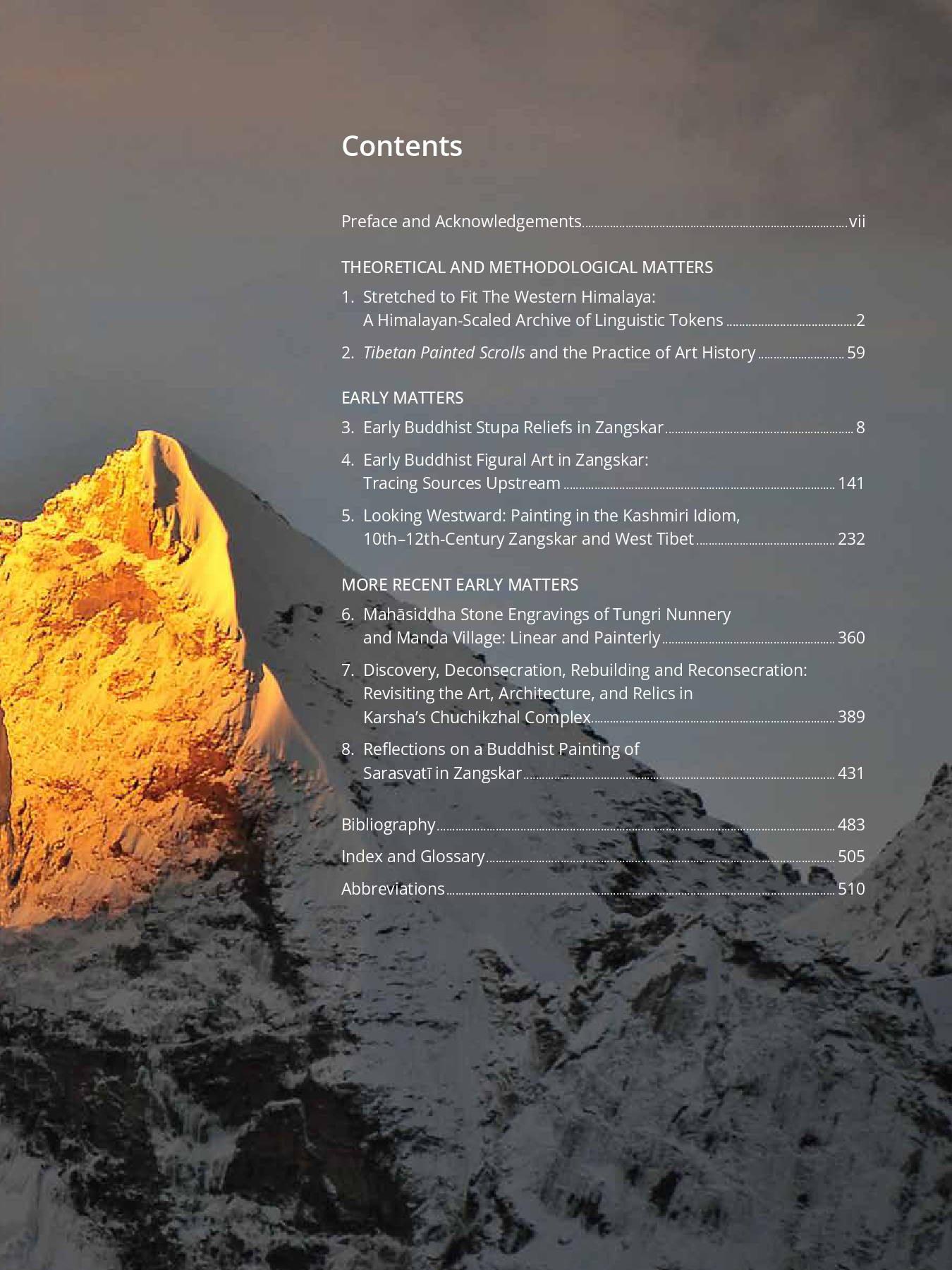
The first chapter of Part I, “Theoretical and Methodological Matters,” takes a historiographic approach to highlight misunderstandings in regional nomenclature. The second chapter reconsiders the relevance of the influential Tibetologist and art collector, Giuseppe Tucci, in the practice of art history on Tibet and the western Himalaya. The three chapters of Part II, “Early Matters,” successively examine the earliest low relief stupa engravings on stone in Zangskar and Ladakh, the early figural carvings and paintings in the area, and the important early Esoteric Buddhist sculptural and painted program at the Malakartse Khar site in Zangskar. The latter are compared to other extant sites in western Tibet. The sixth chapter, the first of three in Part Three, examines two radically different sets of Mahasiddha stone carvings in two neighboring villages of Zangskar. Chapter 7 recounts the discovery, recovery, expansion, and renovation in the twentieth and twenty-first centuries of twelfth- to fifteenth-century structures, paintings, sculptures, and other finds at Karsha village by the Karsha Lonpo Sonam Wangchuk and his family. The final chapter considers a single painting of Sarasvati of late fifteenth- or early sixteenth-century date preserved in the Phugtal Monastery of Zangskar, conjuring the embedded religious and social significance to its monastic sponsor who is depicted at the bottom of the painting. The 585 illustrations, with many details, represents an expansive documentation of culture heritage currently threatened by climate change and the lack of protection for objects traditionally displayed in open view.
(Book + FedEx delivery USD 133 for Germany, France, Austria, UK and USA)
We are happy to announce that the publication “Alchi, Ladakh’s Hidden Buddhist Sanctuary”, which has been published in two volumes in 2023, is now also available through open access. You can find the links to the publication below the book description.
“Alchi, Ladakh’s Hidden Buddhist Sanctuary
The monastic complex of Alchi is undoubtedly one of the most important and fascinating monuments preserved in the Himalayas. With its earliest monuments dating from the late twelfth to the mid-thirteenth centuries, it provides unique insight into the Buddhist culture flourishing at that time.
Through a detailed analysis of the architecture, sculptures and murals in their context, their interrelationship to each other and to Tibetan textual sources likely known at that time the publication offers a deeper understanding of the monuments religious environment. A reassessment of some of the inscriptions preserved at the site provides new insights into the historical circumstances of the temple’s construction.
This two volume publication builds on and includes an updated version of the Sumtsek book by Roger Goepper, covers all early remains of the Alchi Choskhor, and still relies on the quality of Jaroslav Poncar’s early documentation for all main monuments. Holger Neuwirth and Carmen Auer contributed on the architecture and all plans, and Rob Linrothe and Nils Martin contributed new studies on the lineage depiction and the previously not recognised foundation inscription of the Sumtsek.”




 International Association for Ladakh Studies (IALS)